
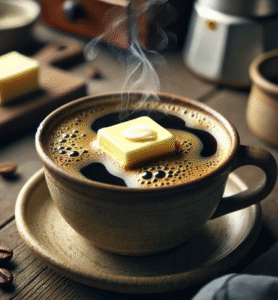
Stirring Up a Revolution One Cup at a Time
Butter in coffee? To the uninitiated, it sounds like a culinary crime. But to millions of health-conscious, high-performance seekers and lifestyle biohackers around the world, it’s a daily ritual. The “butter coffee” phenomenon—popularized by names like Bulletproof Coffee—isn’t just about nutrition; it’s a masterclass in marketing.
This blog isn’t just about the benefits of butter in coffee, though we’ll cover those. We’re digging into the strategic branding, the psychology, the science-backed storytelling, and the influencer-driven marketing machine that took an odd kitchen experiment and turned it into a global movement worth tens of millions of dollars. 🧠💡
By the end of this article, you’ll understand not only why people are adding butter to their coffee—but how marketing turned it into a lifestyle brand, a tribe, and an identity.
The Origins: From Yak Butter to Biohacker Gold
The idea isn’t as modern as you might think. Tibetan yak butter tea has been consumed for centuries at high altitudes for warmth, energy, and mental clarity. Entrepreneur and biohacker Dave Asprey took that inspiration after a trek in Tibet and reimagined it for the modern, high-performance Western lifestyle.
Thus, Bulletproof Coffee was born—a blend of grass-fed butter, coffee, and MCT oil. But the magic wasn’t just in the ingredients. It was in the marketing mix. Asprey didn’t just sell a product. He sold superhuman potential.
“I used to weigh 300 pounds. Then I discovered yak butter tea… and everything changed.”
— Dave Asprey, Bulletproof Founder
That’s a transformation story. And transformation sells. 🔥
1. The Science (Sort of): Selling Biohacking & Brain Fuel
The marketing leaned heavily on biohacking buzzwords: ketosis, mitochondrial efficiency, cognitive enhancement. These weren’t just claims; they were hooks.
Let’s break down the key health benefits butter-in-coffee brands sell—and how they positioned them:
-
Sustained Energy Without the Crash
Butter slows down the absorption of caffeine, giving a smoother, longer-lasting energy boost. That’s a marketer’s dream compared to the spike-and-crash of regular coffee. -
Mental Clarity & Focus
MCT oil—medium-chain triglycerides—convert quickly into ketones, which the brain loves. This positioned butter coffee as not just breakfast, but brain fuel. 💡🧠 -
Supports Ketosis & Weight Loss
For keto enthusiasts, butter coffee is a “fat fast” in a mug. Brands hammered this point to tap into the booming low-carb market. -
Eliminates the Need for Breakfast
One cup of high-fat coffee = satiety for hours. This appealed to intermittent fasters and busy professionals alike.
But what’s important here is that the benefits weren’t just listed—they were framed as solutions. Solutions to fatigue, brain fog, obesity, and mediocre mornings.
2. Branding: The Rise of Bulletproof and Beyond
Bulletproof didn’t just sell buttered coffee. They sold:
-
A tribe of peak performers
-
A morning ritual with a cult-like following
-
A premium lifestyle product (hello $20 coffee beans)
The brand aligned with Silicon Valley culture, podcast influencers, and entrepreneurs chasing the edge.
Key Marketing Tactics:
-
Premium Positioning
Bulletproof coffee beans were marketed as “clean,” mold-free, and optimized. That turned coffee—normally a commodity—into a superfood supplement. -
Content Marketing Mastery
Asprey’s podcast, blog, and books didn’t just promote products—they educated and entertained. This built trust, SEO traction, and loyalty. -
Influencer Amplification
From Tim Ferriss to Joe Rogan, early adoption by high-profile influencers gave butter coffee credibility and reach. -
Bold Claims + Caveats
“This will make you unstoppable… but check with your doctor.” The marketing flirted with hyperbole while covering liability. Smart.
3. Psychology of the Butter Coffee Believer
You don’t just drink butter coffee—you become someone who drinks butter coffee. It’s a badge. A declaration.
Marketing takeaway: This wasn’t about coffee. It was about identity.
By adding butter to your coffee:
-
You say, “I don’t follow old health dogma.”
-
You declare, “I’m a peak performer, a biohacker, an optimizer.”
-
You break rules (fat in coffee!) and feel like a rebel with a cause. 😎
It’s the same psychological technique used by brands like CrossFit, Harley-Davidson, and Apple: brand as identity expression.
4. Copywriting & Language: Why “Butter” Wasn’t Enough
You’ll notice something:
It’s not called butter coffee in most marketing.
It’s “Bulletproof Coffee.” It’s “Brain Octane Fuel.” It’s “Rocket Fuel.” It’s “Fat-Burning Latte.”
Why?
Because copywriters know that names create desire.
“Drink butter coffee” = weird.
“Ignite your brain with Brain Fuel” = compelling.
This is emotional copywriting at its best:
-
“Melt fat, crush cravings, and stay laser-focused—all before 9 a.m.”
-
“Power up your mornings like a Silicon Valley CEO.”
These are not features. These are aspirations. 🌄💪
5. Controversy: Turning Criticism into Conversation
When nutritionists or traditional doctors called the movement dangerous, brands didn’t panic. They leaned in.
Controversy = free marketing.
Articles like:
-
“Why Doctors Hate Bulletproof Coffee”
-
“Is Butter in Coffee a Fad or Functional Fuel?”
These pieces went viral, drove debate, and invited curiosity. It’s the classic “no press is bad press” strategy.
In fact, Harvard Health Publishing published a skeptical review in 2017—and sales surged. Because now people had to try it for themselves.
6. Creating a Market, Then Owning It
What’s brilliant is that brands like Bulletproof created a new category (buttered coffee) and then dominated it.
They built the ecosystem:
-
Proprietary coffee beans
-
Branded MCT oils
-
Branded frothers
-
Travel kits
-
Ready-to-drink cans
-
Collagen and supplements
This allowed for product line extensions while keeping customers inside the brand’s ecosystem.
Marketing wisdom: Don’t sell a product. Create a problem only your solution can solve—and build the solution suite.
7. Social Proof & Community Marketing
The rise of Instagram, YouTube, and Reddit accelerated the trend:
-
#ButterCoffee posts flooded feeds
-
YouTubers posted side-by-side experiments: “7 Days on Bulletproof Coffee”
-
Reddit threads debated the “cleanest” way to blend butter in
This created a loop of social validation, where testimonials and transformations fueled new adoption.
Even celebrities jumped in:
-
Joe Rogan called it “rocket fuel for your brain.”
-
Shailene Woodley swore by it.
-
Tim Ferriss wrote about it in Tools of Titans.
8. The Competitive Gold Rush
After Bulletproof cracked the code, others followed:
-
Picnik released buttered coffee in Whole Foods
-
Laird Superfood offered plant-based butter coffee alternatives
-
Super Coffee added keto-friendly fat blends to ready-to-drink bottles
These brands used similar language—“Clean Energy,” “Brain Fuel,” “Zero Crash”—but tried to differentiate with ingredients, sustainability, or diet-specific appeal.
The market validated the model. And every new player brought more attention to the butter coffee movement.
9. Expanding the Philosophy: Not Just a Drink, a Way of Life
Butter coffee wasn’t just a beverage—it was a gateway drug to a better you.
From there, Bulletproof and others expanded to:
-
Sleep hacks
-
Blue light blockers
-
Collagen protein bars
-
Anti-aging supplements
-
Keto guides
Marketing translated one product into a movement. And a morning drink became a full-blown lifestyle funnel.
Conclusion: What We Can Learn from Butter Coffee Marketing 🧈
Whether you love it, hate it, or sip it daily, you can’t deny the brilliance behind the butter coffee boom.
✅ It took a strange idea and gave it a story.
✅ It used science—real or fuzzy—to sell benefits.
✅ It leaned into identity-driven branding.
✅ It created a category, community, and culture.
And most of all, it proved that you’re not just selling coffee—you’re selling who your customer wants to become.
Final Sip: Want to Build a Tribe, Not Just a Trend?
If you’re building a wellness product or lifestyle brand, take notes from the benefits of butter in coffee playbook. Start with why. Market the transformation. Make it emotional. Make it visual. And make it shareable.
Because when marketing’s done right—even butter in coffee doesn’t sound so strange. In fact, it sounds irresistible. ☕🔥